
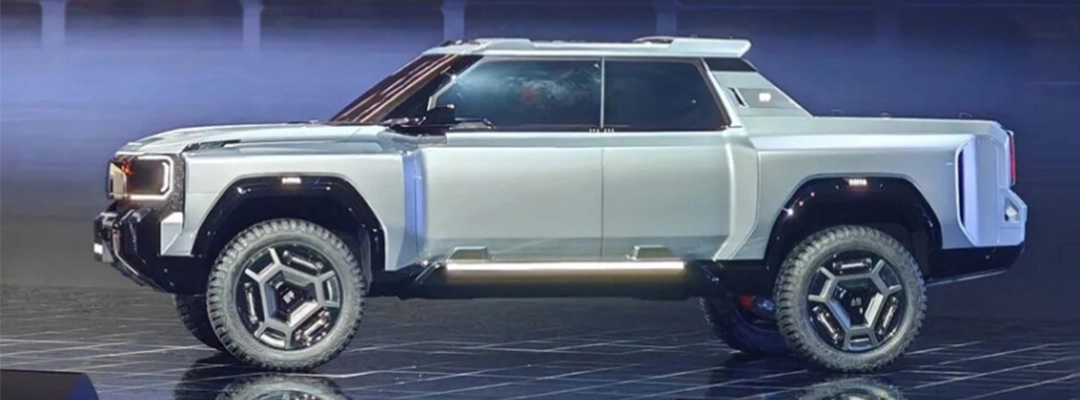
Jetour’s First-Ever Bakkie is Here
This past month, Jetour introduced its very first bakkie, the F700, at the 2026 Beijing Motor Show.
Jetour, the Chery-owned Chinese brand that has been slowly but steadily building a loyal following in South Africa, has just pulled the wraps off its very first double-cab bakkie.
And for South African buyers, the timing could not be more interesting.

From Concept to Reality
The F700 is not a name that appeared out of nowhere. It sits under Jetour’s Zongheng sub-brand, a range purpose-built for serious off-road performance.
The G700, the flagship SUV in the same family, came first. The F700 is the second model to carry the badge, and while the production version shares much of its visual DNA with the concept that turned heads at the Shanghai Motor Show last year, it has been refined into something that looks ready for the road.
Built on a ladder-frame chassis, the F700 is a proper body-on-frame bakkie.
Jetour has kept quiet about whether the platform is shared directly with the G700, but what is confirmed is the powertrain sitting under that bold bonnet.
The Powertrain That Changes the Conversation
The F700 is a plug-in hybrid, and a rather remarkable one at that.
The system combines a 2.0 T-GDI turbocharged petrol engine with a 31.4 kWh battery pack and dual electric motors, producing a combined output of 665 kW and 1 135 Nm of torque.
A two-speed Dedicated Hybrid Transmission (DHT) is the sole gearbox option, and it is the same setup that underpins the G700.
For context, that torque output rivals some of the most performance-focused vehicles on the planet, packaged inside a double-cab bakkie.
On pure electric power, the G700 manages 150 km on China’s CLTC cycle. With the combustion engine in play, the combined range stretches to an extraordinary 1 400 km.
While the F700’s specific figures are yet to be confirmed independently, given the shared drivetrain, expectations are understandably high.
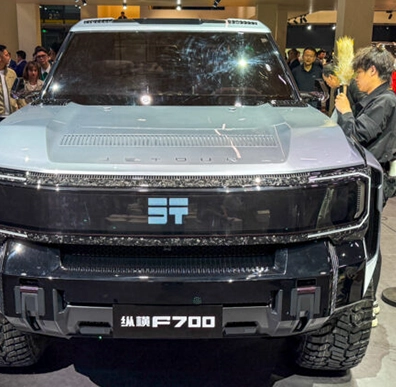
What Is Different From the G700
One notable distinction is that the F700 does not carry over the G700’s amphibious capabilities, a feature that made the G700 famous when it became the first production vehicle to cross the Yangtze River under its own power.
For a bakkie designed to compete in the real-world market, this is a sensible editorial decision rather than a shortcoming. South African roads, from Gauteng highways to Limpopo gravel tracks, need capability, range, and reliability.
The F700 appears to have all three.
The interior is expected to follow the G700’s lead, with a 15.6-inch central touchscreen and a near dashboard-wide 35.4-inch panoramic display.
If the cabin lives up to what the spy shots suggest, this will be a bakkie that feels more like a luxury lounge than a workhorse cab.
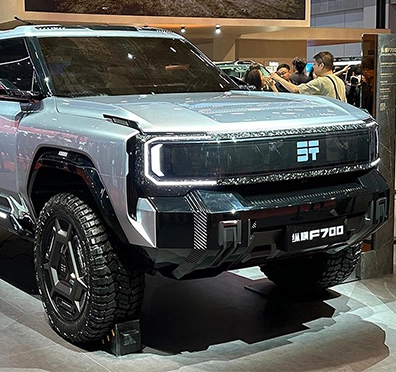
South Africa’s 2027 Arrival
Jetour has confirmed that the F700 is South Africa-bound, with a 2027 arrival pencilled in.
It will form part of a three-model Jetour wave entering the local market, alongside the G700 SUV and an all-new fully electric SUV.
The bakkie segment in SA is fiercely competitive, with established players holding strong ground, but a plug-in hybrid double cab at this performance level represents a genuinely new proposition for buyers who want to move beyond conventional fuel dependency without sacrificing capability.
Adding further dimension to the local bakkie landscape, the F700 will also share showroom space with two other Chery Group entries: the KP31 and the Rely R08, formerly known as the Himla.
South African bakkie buyers will soon have more choice than ever before.
Why This Matters for SA Buyers
Jetour’s trajectory in South Africa has been one of confidence.
The brand entered the local market and established itself through a combination of excellent pricing, strong technology, and a product range that resonates with South African drivers.
The F700 is a natural next step: a vehicle that takes everything the Zongheng name stands for and packages it in the format that South Africans love most.
Full production details and local specifications will follow as the 2027 launch date draws closer, but what Beijing revealed is already more than enough to put this bakkie firmly on the radar.
Looking to kit out your 4×4? At Trax Parts and Accessories, we have a range of products that you can buy online. Visit our online store to have a look at what we have available.
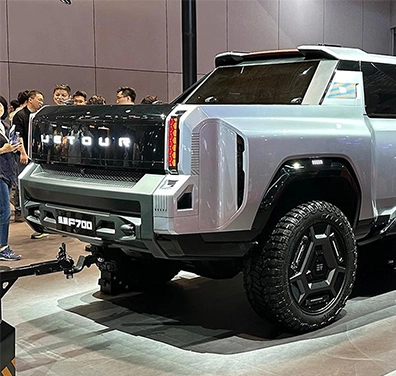
Frequently Asked Questions
What is the Jetour F700, and when will it be available in South Africa?
Yes, the T2 features four-wheel drive with an electronically locking differential and multiple off-road modes. While it handles challenging terrain well, it’s better suited to moderate adventures than extreme off-roading.
What powertrain does the Jetour F700 use?
The F700 uses Jetour’s CDM-O plug-in hybrid system, combining a 2.0 T-GDI turbocharged petrol engine with a 31.4 kWh battery pack and two electric motors. Total system output is 665 kW and 1 135 Nm, paired with a two-speed Dedicated Hybrid Transmission (DHT). Based on the shared drivetrain with the G700, an all-electric range of around 150 km and a combined range of up to 1 400 km can be expected.
How does the Jetour F700 compare to the G700 SUV?
The F700 shares the G700’s ladder-frame construction, plug-in hybrid powertrain, and Zongheng off-road DNA, but is configured as a double-cab bakkie rather than an SUV. The F700 does not carry over the G700’s amphibious capability. Both are expected to feature premium cabin technology, including large digital displays.
Is the Jetour F700 a good option for South African conditions?
The F700’s ladder-frame chassis, high-output powertrain, and expected multi-link rear suspension make it well suited to the varied demands of South African driving. The plug-in hybrid system reduces fuel dependence on longer trips, while the estimated combined range of up to 1 400 km suits South Africa’s long-distance travel patterns particularly well.
Where can I find out more about the Jetour F700 in South Africa?
Traxpa is South Africa’s destination for all things Jetour. Visit traxpa.co.za to stay updated on the F700’s local specifications, pricing, and launch timeline as details are confirmed ahead of the 2027 introduction.


